AI AUTOMATION & OPERATIONAL DESIGN
Automate the repetitive work. Keep authority where it matters.
We find where work gets stuck and build what’s worth changing. With your people in control.
How we start
Three steps. You decide at each one.
Nothing is owed until you accept a scope and fee in writing.
A free call
We learn where work gets stuck, what matters to your team, and whether a specific issue is worth a closer look. No extensive preparation, and no access to your systems needed.
A paid Discovery Audit
Before you pay for new software or a custom system, understand the problem it needs to solve. The Audit gives you clear priorities and the reasoning behind them. You can use the findings whether you make changes yourself or ask us to help. The report is yours to keep. Any Audit fee credit toward a Build is agreed in writing before paid work.
A Build, if you agree the Audit supports it
Scoped from what the Audit found, and decided separately. A smaller change, more investigation or no build at all are ordinary outcomes too.
What happens between the free call and the Audit?
If there's a fit, we can arrange a prepared second free call with no obligation. You can stop there with nothing owed. Before any paid work, you receive the scope, fee and required agreements in writing. Buying an Audit doesn't commit you to a Build.
Does any of this sound like your week?
If more than one of these sounds familiar, you’re an exact fit.
-
You’re growing faster than the way you work
But the business is still running like it’s half the size.
-
Your systems don’t talk to each other
Changing something in one place means you have to change it everywhere else by hand.
-
Everything runs through one person
They do the scheduling, the payroll, the invoices and the ordering. Every tedious task. Every single week. Operations are entirely dependent on their individual workflow.
-
Every job starts somewhere different
Potential customers can call, email, or fill in a form.
Each one is untracked and handled in a different way.
Not sure which of these costs you most? Put rough numbers to it in the checker
How it works
Start with what costs you the most time.
Three stages: find where the time goes, write down how the work runs, then build what is worth automating.
Audit
We find where the time goes and what it costs you.
We go through the part of the business we agreed on: how work comes in, where it waits, who handles it. You get one written report and a walkthrough: what to fix first, what to leave alone, and why.
Document
We write down how the work runs and who signs off.
Your steps, your tools, your routing rules, and the ones nobody wrote down. Every owner named, and every point where something stops for a person. Nothing gets built from a guess.
Build
Your team stops doing the parts a system should do.
Where a build is worth it, we build from that record, connect the tools it needs, and show your team how it works. One fix at a time: the next starts when the first is holding up.
What you see
Each week you get a list of what it did and what it got wrong.
What came in, what was done about it, and what’s still waiting on you.
Requests
Whatever the channel
- Sort and route
- Acknowledge and log
Scheduling
Who, and when
- Assign and book
- Remind before it slips
Billing
What it costs
- Prepare the invoice
- Chase what is unpaid
Documents
What gets exchanged
- Collect and file
- Check it is complete
Waiting on you
What needs a person
- Approvals queued
- Problems raised
Prepared work
Ready for a decision
- Drafted replies
- Suggested next steps
The record
What actually happened
- Decisions logged
- Owners named
Reports
What it added up to
- Weekly summary
- What went wrong
After the build
We stay on after it goes live.
Your business changes, and so does what software can do. Something built once and left alone falls behind. If you want us to keep working on it after it goes live, we agree what that covers.
We watch it run
Real use finds what a test never does. We watch what it does once real work goes through it, and fix the parts that turn out awkward.
It grows with you
The Audit report shows what else was worth a look within its scope. When you're ready for the next change, we scope it with you, and some of what wasn't worth building last year might be now. We aren’t just building software; we’re cultivating a relationship.
You have someone to ask
A quick question doesn’t need a new project. You ask the people who built it.
Anything that commits you waits for your approval.
Any build we propose is designed so that a quote, a booked date or a message in your name waits for someone on your side. They approve it, change it or throw it out.
Which steps those are, and how problems reach a person, is agreed in writing before anything is built. It’s a rule about how we build. Things can still go wrong, which is why it’s written down.
Who you’re talking to
There are two of us.
The person who scopes your work stays your contact.
-
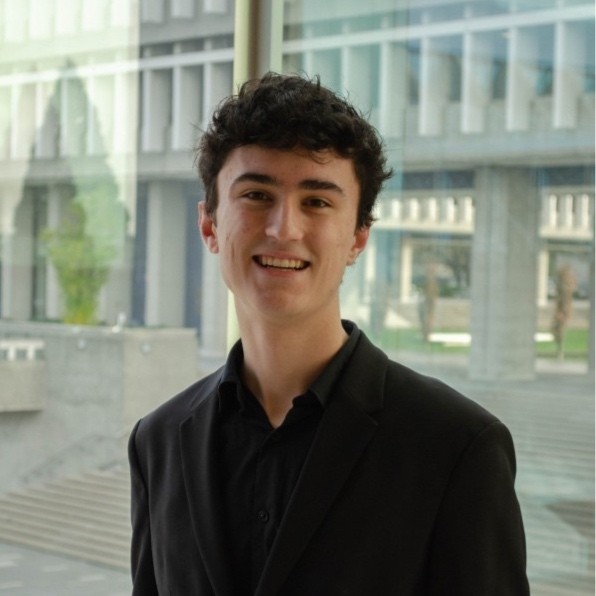
Madden Wynans
Co-founder & AI Systems Consultant
Computer Engineering, minor in Computer Science · Prev. validation engineering co-op, Microchip Technology Incorporated
Madden on LinkedIn -

Dalton McNabb
Co-founder & AI Systems Consultant
Computer Science · Prev. Lead Gen & Paid Ads Agency Owner
Dalton on LinkedIn
FAQ
Common questions.
What does Anteform do?
We set up software that takes repetitive office work off small, owner-run businesses in Surrey and the Lower Mainland. That can include quotes, invoices, follow-ups, bookings and the phone. Anything that commits you waits for your okay.
Where do we actually start?
With a free 30-minute call. We learn where work gets stuck and tell you honestly whether a closer look is worth it. No credentials or client data change hands.
How is this different from a chatbot or an off-the-shelf AI tool?
A chatbot answers questions. What we set up does the office work, and it starts from how you already do it, including the steps nobody wrote down. If an off-the-shelf tool already does the job, we’ll say so.
Does Anteform run actions autonomously?
In a build, routine steps run on their own. What stops for a person is your call, agreed in writing before anything is built. Whatever you put on that side waits for someone you’ve authorized, and the record shows who decided.
What kinds of businesses are a fit?
Any owner-run business where the same office work comes up every week and passes between people or tools. Size and sector matter less than that. Worked examples for several kinds of business are on the for your business page.
Does all of it need AI?
No. A lot of repetitive work is better handled by a plain rule that does the same thing every time. Where that’s true, we build it that way and tell you so. AI goes where the work needs reading, sorting or drafting.
Does it work with the tools we already use?
The audit checks that before anything is built. Where a tool can’t be connected properly, we say so instead of working around it and calling it connected.
Do we need a technical team to run it?
We check what your team would need to use and manage a proposed Build. The written scope includes any training and responsibilities. If it needs more technical support than you can provide, we say so.
How fast can something go live?
One piece at a time. The first one goes live and has to hold up before we scope the next. That’s slower than switching everything on at once, and it means one problem at a time. Any date comes out of the audit, based on how you work.
What kind of results should I expect?
No number is promised here. Anyone who gives you one before seeing how you work is guessing. The audit gives you your own figures: what the work in the agreed scope costs you now, in hours and dollars. That is what the work gets measured against.
Who sees our data?
The first call needs no credentials and no client data. A build is set up so each person sees and approves only what their job needs, and each approval is recorded with their name. What gets collected, where it’s held and how long it’s kept is agreed in writing before the build starts.
What happens after it is built?
You can see what it produced and who decided what. After it goes live we can stay on: watching it run, fixing what turns out awkward, and building the next piece when you’re ready. What that looks like depends on what you need, and we work it out together.
Tell us where work gets stuck.
A free 30-minute call, nothing to prepare, no access to your systems. If what you describe isn’t worth changing, we’ll say so.
Book a Free Callor call 236-235-5281